Hoarding Cleanout Renovation Case Study Part 5: From Empty to Everything in Northern Virginia
From Empty to Everything — The Renovation Begins, Part 5
This is Part 5 of a six-part case study. Start from the beginning with Part 1 or catch up with Part 4.
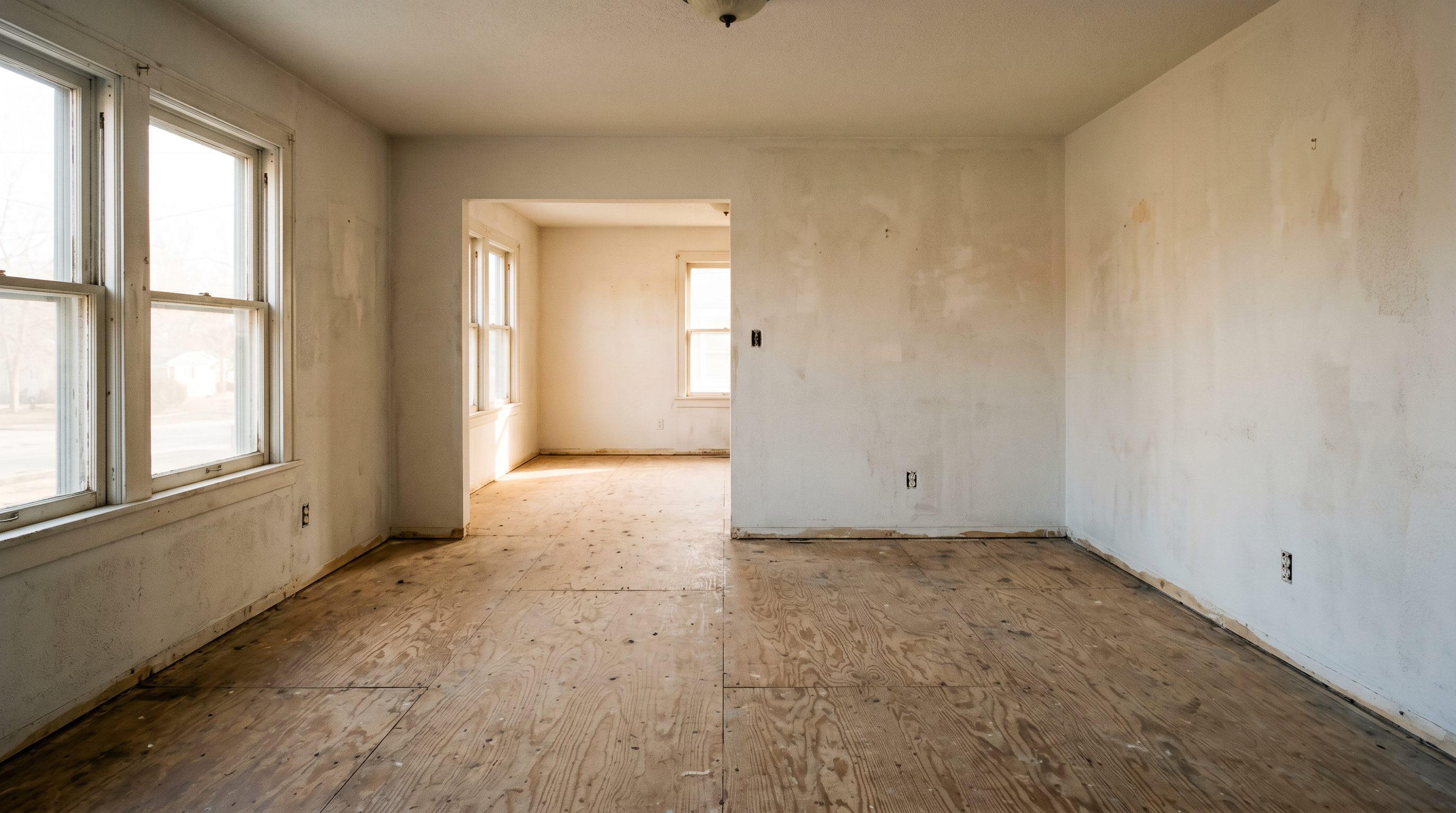
When the last cleanout crew left the property, three weeks of work stood behind us. Two full-size dumpsters had been hauled away. Every room in the home was empty and accessible for the first time in years.
But empty is not the same as ready.
The home had absorbed decades of heavy use, repeated flooding in the basement, and years of deferred maintenance. The bones were good — the floor plan was sensible, the structure was sound, the roof and windows had life left in them. But everything inside needed to go.
That is where the renovation team came in.
After a full hoarding cleanout the renovation of this three-bedroom, three-bathroom Northern Virginia home required a complete interior refresh — new flooring throughout, all new bathrooms, updated kitchen, new appliances, new lighting, fresh paint on every surface, and full basement remediation including replacing paneling with drywall. A third full-size dumpster was filled during demolition alone. The floor plan and layout required no changes — the home's original structure was solid.
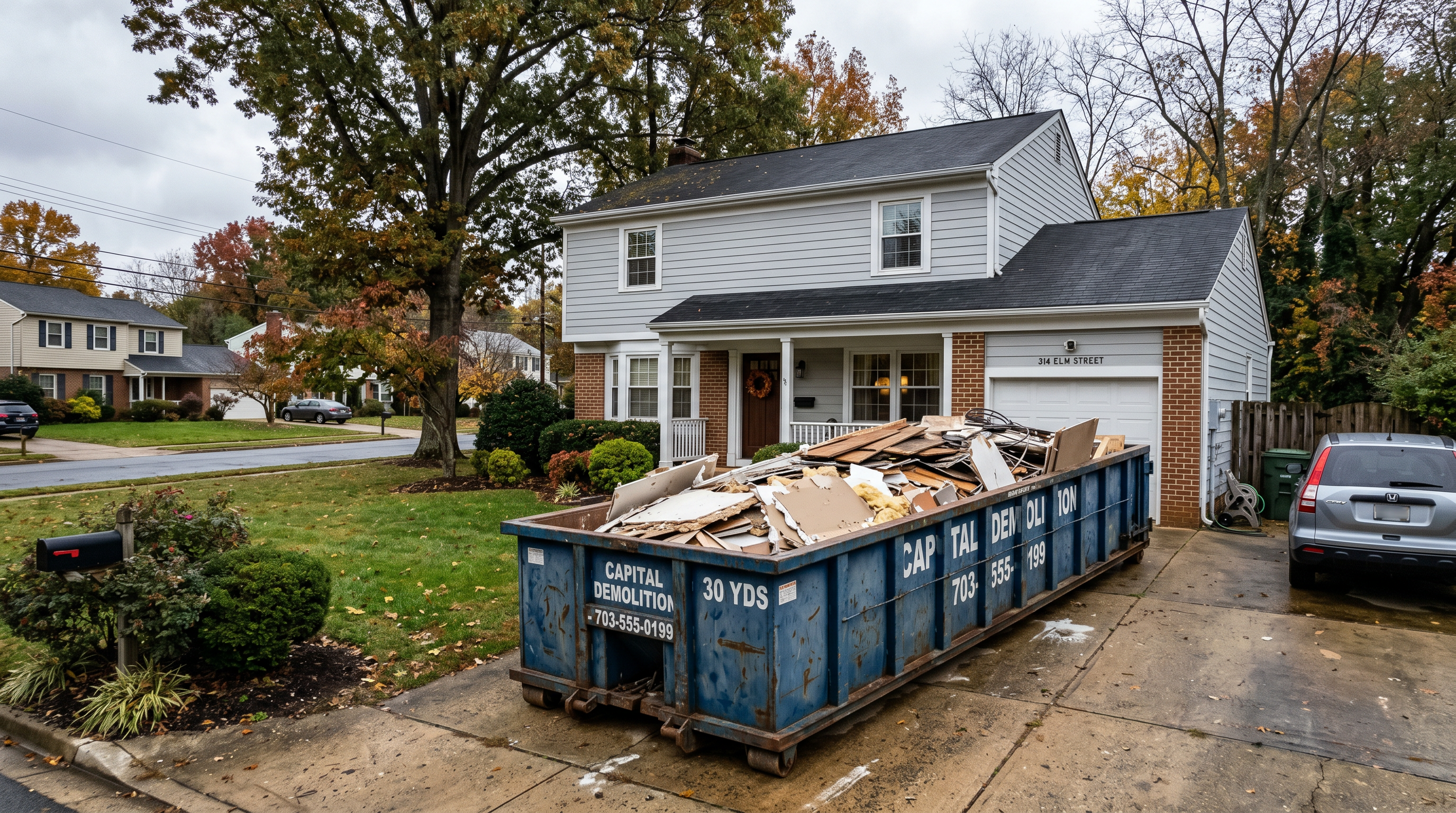
The Third Dumpster
Most people think of the dumpsters as part of the cleanout. And they are — two full-size dumpsters came and went during our three weeks of clearing the home.
But when the renovation team began their demolition work, a third full-size dumpster was staged and filled.
What went into it:
- All flooring throughout the home — pulled up and removed entirely
- All appliances — refrigerator, stove, dishwasher, washer, dryer
- All toilets, sinks, showers, and tubs — every fixture in all three bathrooms
- Old tile — bathroom and kitchen tile removed completely
- Basement paneling — the old panel walls throughout the finished basement
- Moldy drywall — anywhere moisture had compromised the walls, particularly near the flood-affected stairwell area
- Hot water tank — past its useful life and replaced
- Miscellaneous demo debris — the accumulated material of a full interior strip-out
Three dumpsters total across the entire project. That number tells its own story about the scope of what this job involved from start to finish.
What the Renovation Team Found When They Started
Walking a property after a hoarding cleanout and walking it after demolition begins are two very different experiences.
The cleanout revealed the condition of the contents. The demolition revealed the condition of the structure beneath them.
What the renovation team found:
- Basement: The flood damage from the broken well pump pipe was more extensive than the surface suggested. Once the old paneling came off the walls the full picture of the moisture damage was visible. Affected drywall was removed entirely. The basement was taken back to the studs in the damaged areas, properly dried and treated, and rebuilt with new drywall. The broken pipe was repaired as part of this phase.
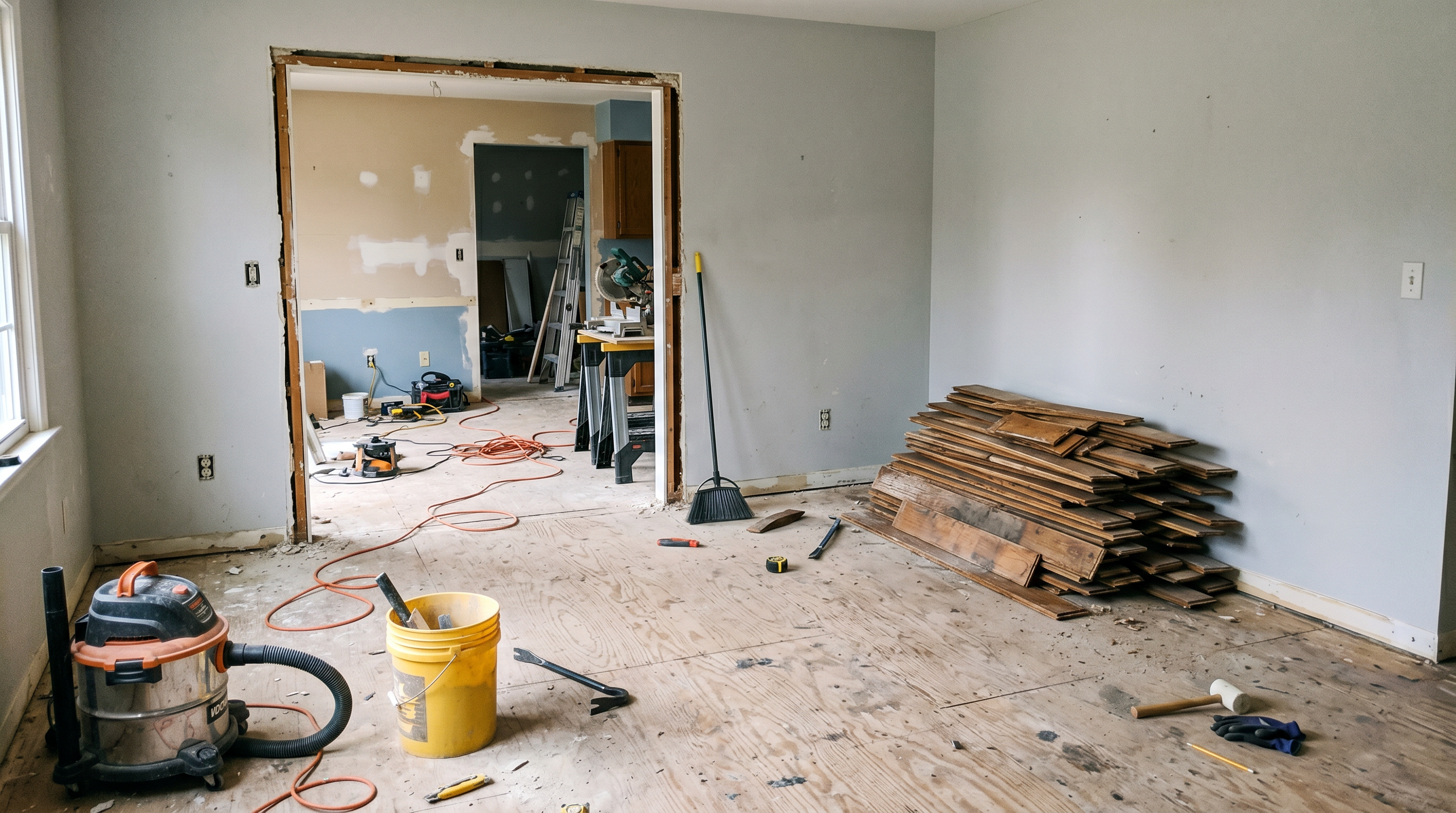
- Bathrooms: All three bathrooms were stripped completely. Tile out. Fixtures out. Vanities out. What was left were the walls, the floors, and the plumbing rough-in — a clean slate for three entirely new bathrooms.
- Kitchen: The cabinets were a genuine find. High quality, solidly built, and in good structural condition despite everything around them. The decision was made to keep and update them rather than replace them entirely — new hardware, new paint, refreshed and restored. The appliances, countertops, and fixtures were all replaced.
- Flooring: Every surface — every room, every hallway, every level — was pulled up entirely. What went back down was new LVP throughout the home, consistent and clean from room to room.
What Was Kept — And Why It Mattered
In a full renovation after a hoarding cleanout it can be tempting to assume everything needs to go. That assumption costs money and time that is not always necessary.
In this home three things were worth keeping and restoring rather than replacing:
- The kitchen cabinets — built well and built to last. Updating rather than replacing saved significant cost and the result was a kitchen that looked refreshed and intentional.
- The windows — no replacement needed. Clean, functional, and in good condition. Left in place.
- The roof — inspected and found to be in sound condition. No replacement needed. Left in place.
- The deck — needed minor repairs and a full paint, both of which were completed as part of the exterior refresh.
Making smart decisions about what to keep versus what to replace is part of what makes a post-hoarding renovation financially worthwhile. Not everything that looks worn beyond saving actually is.
What the Home Looked Like at the End of Demo
By the time demolition was complete the home looked raw — studs visible in parts of the basement, subfloor exposed throughout, bare walls waiting for paint. A third dumpster full of the home's old interior had left the property.
But underneath the decades of wear and water damage and accumulated life, the structure of the home was exactly what it had always been. Solid. Well-proportioned. A good floor plan that needed no changes — just a fresh start.
The build-back was about to begin.
In Part 6 we cover the finished renovation — new bathrooms, new floors, new light throughout — and the result that surprised even the family who had been hoping for the best.
If you are managing a property that needs both a cleanout and a renovation path forward, call us at 540-538-7092. We work regularly with renovation teams and real estate professionals and can help coordinate the full process from first call to market-ready. We serve Woodbridge, Prince William County, Stafford, Fredericksburg, Spotsylvania, Orange County, Caroline County, King George County, and Fairfax County.